The Unknowing of the Younger Me
2025
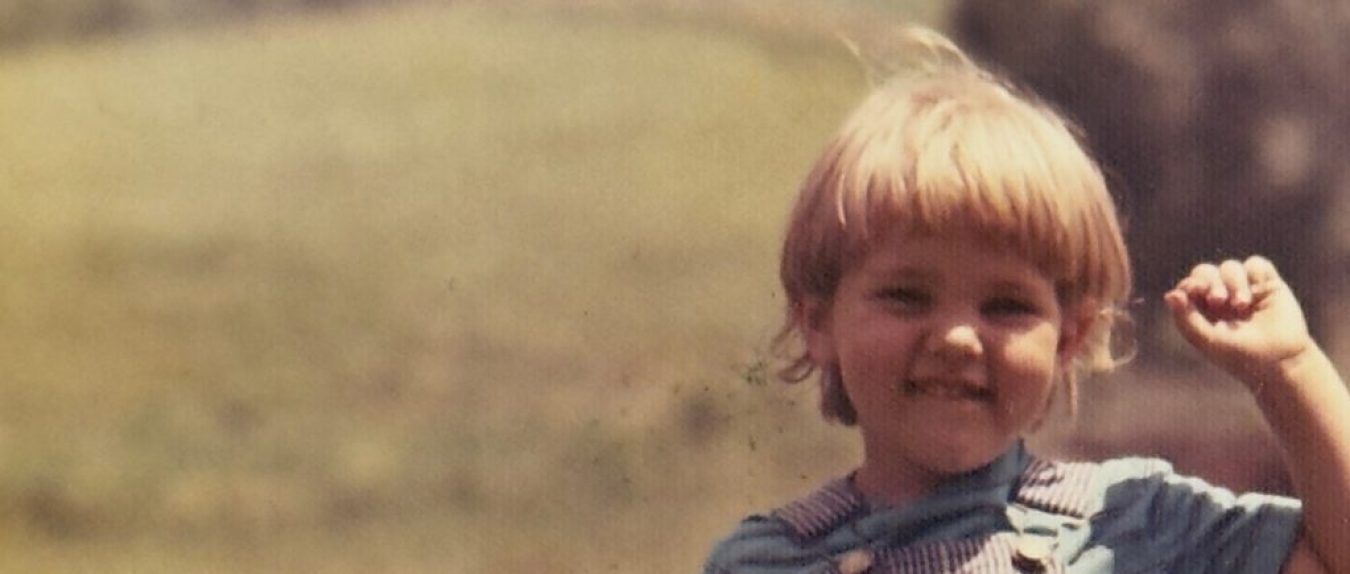
Every technology coerces an exchange. In this photo of myself as a child, I no longer remember that day; I remember the photograph. It hasn’t preserved my childhood. It has replaced it. Using technology, I de-thaw this frozen moment: the child drops their arm, runs. These actions are not memory but patterns learned across millions of other childhoods. It is a homunculus: plausible but not true, convincing but never real.
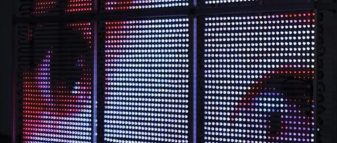
The most cunning technologies fade into baseline reality, shaping experience from beneath conscious awareness. The work makes this visible: concealed LED panels project the animation upward through a canvas on an easel. Concealment and revelation become a single gesture.
We are now homunculi of ourselves, lives particularity dissolved into statistical aggregate. The homunculus cycles on the canvas, attempting escape, eternally returned to its starting pose. That raised fist is ambiguous now, triumph or plea, a frozen gesture it cannot fathom. We are not remembered but replaced.
1 Channel Video, LED Matrix, Canvas, Easel
Dimensions
H: 1.4m W: 0.8m D: 0.7m
There is a photograph of me as a child, standing in a field. I am somewhere around eight years old, wearing overalls, one fist raised in what could be triumph or maybe joy. I hold no memory of this moment, not of the photograph being taken, not who pressed the shutter. There is nothing of what I was thinking and feeling, nor even being in that field, its location lost to me. Furthermore, I don’t know who that child was. What were their beliefs, what they wanted to be, or how that child perceived the world. This image exists as evidence of my presence at that exact moment in space and time, yet it simultaneously accentuates the absence of experience. What should be a cairn of the past is merely a note that this past occurred.
Photography promised to preserve our experiences, to hold time still so that we might revisit it. Walter Benjamin though, understood that every new technology coerces an exchange: we gain something only to surrender something else. When photography captures a moment, we gain longevity and permanence, but we are swindled out of the immediacy of pure memory, unmediated by the image. The photograph gifted me a durable artifact of that day in the field, shareable and permanent, at the cost of a lived memory with its own authority. I no longer remember what’s in the photograph; I remember the photograph of that day. The image hasn’t preserved my childhood; it has replaced it.
Like the alchemist, I can bring life to this dead matter. Using image-to-video generation, I de-thaw this moment frozen in time. The child drops their arm, notices something off camera, and with a sense of awe, begins to run. These movements didn’t come from my memory or experience. It’s generated from patterns learned across millions of other childhoods, constructing what a child “should” do in a field based on what countless other children have done. The result is a homunculus: an artificially constructed simulacrum of life, plausible but not true, convincing but never real.
Benjamin only observed the beginnings. We have moved beyond technology merely reproducing; it fabricates what never was. The homunculus is not a copy of childhood but a construction assembled from parts, an approximation that replaces the irretrievable original.
The most cunning technologies move into the space we see/don’t see. They meld so thoroughly into our daily life and vernacular that we stop recognizing them as technology but as an unremarkable part of our baseline reality. Electricity, plumbing, payment systems, the algorithms that sort our email and make shopping recommendations: invisible systems shaping experience from beneath conscious awareness.
The work makes this process visible by rendering it physical. A white canvas, that traditional surface of painting, that iconic art object sits on its easel. Concealed beneath, LED panels project the animation upward through the canvas. The technology remains hidden, operating in the quiet beneath, while the canvas acts as both veil and screen. Yesterday and today, concealment and revelation, collapse into a single gesture. What generates the moving image stays below, where we cannot see the machinery.
This is not unique to this artwork or this photograph. We are all becoming homunculi of ourselves. Every algorithm-mediated experience transforms lived particularity into statistical aggregate. Our social media shows us not what is happening but what engagement patterns suggest we want to see. Our navigation apps route us not through our own spatial understanding but through collective traffic data. Our communication autocompletes not our thoughts but probable sequences derived from millions of other messages.
The installation performs what it critiques. It presents artificial generation, revealing the pseudo-memory. The homunculus cycles on the canvas, attempting escape, eternally returned to its starting pose; that raised fist now ambiguous, triumph or plea, a frozen gesture it cannot fathom. The viewer witnesses the spell and kneels before it.
We are becoming ambiguous aggregates of ourselves. Not averaged but assembled, not reproduced but generated, not remembered but replaced. The younger me is inaccessible, and what moves in its place is a homunculus constructed from millions of unknown, nameless children and their childhood, plausible enough to be convincing, uncanny enough to be unsettling, incomplete enough to reveal the loss.